A seamless restoration: Fireplace Removal from 1870’s Edinburgh
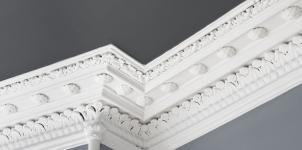
This fireplace removal was our complete service, including matching the period skirting with an exact match of wood machined to the same size and profile using pieces of the original as profiles. This is, without doubt, a preferred option with period properties as the original skirting type will be impossible to buy “off the shelf.”
Undoubtedly, direct replication stands as the preferred choice during period property restoration, considering you can not buy the original skirting type anywhere.
To ensure authenticity, we meticulously machined the historic wood components to match the size and profile of the original pieces, as finding ready-made substitutes for period skirting ruins the charm of your space.
Why our client requested this Victorian Edinburgh fireplace removal
The fireplace was removed to create much-needed space in a smallish bedroom as it no longer served any useful purpose and, to some extent, dominated the room, being large for the space whilst also restricting the layout as a single bedroom.
Period property fireplace challenge
The wooden surround was of some age, although the fire itself wasn’t; this led us to believe that part of the surround had been removed and then refitted with a new fire at some time in the recent past. The tiles seemed to have been reused in the new fire as they were the same as the hearth, which appeared to be the original. Somewhat of a mystery, this is not that unusual; however, most older fireplaces will throw up a few surprises. It just makes things a bit more interesting!

How we solved it
The first part of the process was to remove a small section of skirting; this was then sent off for the machining of the new skirting to be carried out. This was done four weeks before the actual start date to ensure it was to hand when starting the work.

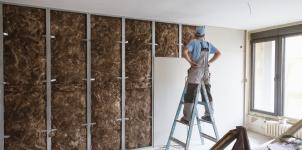
To remove the surround, it had to be taken out in one piece as the customer had other plans for it. To do this, we removed all the plasterwork around it to access its fixings. From that point on, the job was reasonably straightforward. We then framed the insert with wood and sheeted the whole area with plasterboard. The surround was also embedded into the adjoining wall; this only required removing a small section and replastering.
Why this matters
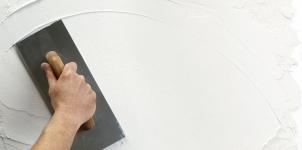
The application of Universal Renovation Plaster, skillfully “floated” to match the original wall’s texture, underscored our commitment to using high-quality materials. Universal plaster is our preferred product for fireplace removals due to its high strength and excellent workability when “floating” is required.
Getting to work:
The hearth was now at a lower level than the floorboards due to the removal of the tiles. This was primed with an appropriate solution and returned to the same level with a self-leveling compound, which sets to a rock-hard smooth finish. Most people paint this black, which is innkeeping to most period properties.
The final stage was to fit the new skirting, and in this case, a new piece of quarter bead. This was very straightforward as it was only a single-section skirting. Most period skirtings that we have machined are box skirtings that are in two or more pieces, not to mention the underlying framework.

Elegance is critical in period property restoration.
Wrapping up the fireplace removal and restoration
The customers were delighted with the result and could now utilize the room to its full potential.
This fireplace removal project came to me with the fireplace partly dismantled. The customer had started dismantling it herself and then got out of her depth. The customer’s objective was to open the fireplace up to create a feature for her living room with the option to fit a wood-burning stove at some point in the future.
The photo above shows my starting point, where all the surrounding 1930’s brickwork had been removed by the customer. This means that the fireplace had been reworked at least once since its original construction.
My first priority was to check that the lintel was still intact and fit for purpose. Next, I removed all the internal brickwork to return it to its bare original form.
In the next photo, you can see some of the lath where the plaster was cut back around the area to create a decent level on which to start the process.
How fireplaces were inserted and then plastered to in past times resulted in a swoop of the original plasterwork, to the fireplace, resulting in a very wonky wall, once exposed. By removing the original plasterwork, we can then create a proper level.
The wall itself, i.e., the lathwork, was sheeted with plasterboard. However, the internal stonework was primed with PVA, a sealer/bonding agent. The edge of the fireplace was then beaded with galvanised corner beads to create a sharp edge to work the plaster off on both the board and stone.
The whole area was then plastered with Universal Renovating Plaster, creating a solid, smooth finish all over. The customer was delighted with the resulting new fireplace.
On this occasion, we did not replace the skirting board to match the existing as the customer was fitting out her whole property with new skirting.
Need a quote on a fireplace removal or a restoration?
Text us on 07802 694 957 to arrange a quote or use the online form

Plastering Services Edinburgh | Ceiling repair | Wall repair | Edinburgh period property Restoration & Renovation
We specialise in fireplace removal in the Edinburgh area and lately have seen a sharp increase in requests for this service. The fireplace removed was reasonably straightforward – a 1920s build that was no longer required. The homeowners requested full removal, plastering, and replacement of the skirting boards to match the original.
Here’s how it was done:
BEFORE- OUT WITH THE OLD (Fireplace)
The process starts with the demolition of the fireplace. This is followed by the blocking up of the fireplace opening which will require the construction of a wooden frame. Plasterboard is fitted thereafter. The area is then plastered with Universal Renovation plaster to the exact level of the original plasterwork. Thereafter a skirting board is sourced and fitted to match the existing boards in the room. Finally, the hearth may need some cement work to bring it up to the floor level. This process, from start to finish, can sometimes be of a tricky nature as you ultimately go in blind. Notably, most older fireplaces can have been reworked; sometimes multiple times.

Above: This is the original fireplace before work commenced…

Above – And the fireplace completely removed…
The fireplace frame was removed and the old brickwork was chipped away and the hole filled. The mortar was then removed along with the old frame.
AFTER- IN WITH THE NEW (plastered wall & floor)

Above: A fresh coat of smooth lime plaster completes the job. In addition, we leveled the hearth and installed a matching skirting board.
This is a fairly standard fireplace removal and that takes 3 days normally to complete.
Need your fireplace removed? Contact us and get a free quote.
Learn more: Fireplace removal
Text us on 07802 694 957 to arrange a quote or use the online form
Plastering Services Edinburgh | Ceiling repair | Wall repair | Edinburgh period property Restoration & Renovation
FIREPLACE REMOVAL- UPDATE FROM THE ROAD (EH45 INNERLEITHEN)
Our fireplace removal service seems to be popular! We are seeing many Edinburgh homeowners desiring the removal of their fireplace. This time we went to the Borders in Innerleithen where a living room was having a makeover. Here’s how we removed this fireplace:
First, remove the old fireplace facade without damaging the brick wall behind the fireplace. The goal is to put a new layer of lime plaster over the wall to cover the old fireplace.
BEFORE- FIREPLACE TO BE REMOVED

Fireplace removal- before…
Removing a fireplace can take a long time if you don’t know what you are doing. It’s essentially a small demolition job. And while it looks fun, you must be careful not to damage whatever you find behind the fireplace. Edinburgh buildings tend to have a history behind them, and walls can be damaged if you charge in without assessing the foundation and wall condition as you conduct the demolition.

Fireplace removal- the controlled ‘demolition’
Next, carefully conducting the fireplace removal will help preserve the floor and the wall/ Once the rubble is clear, the wood is recycled, and the wall is ready for plastering and painting.
AFTER- FIREPLACE WAS REMOVED, NEW PLASTER WAS ADDED

Fireplace removal-after
Finally, now that the fireplace has been removed and the wall gets a nice coat of fresh lime plastering to smooth it out. You can’t even tell there was a fireplace there, except for the floor and trim, which needs a repair. Smooth walls and no traces of a fireplace are the goals of fireplace removal.
Another happy customer, and one less fireplace in the living room!
Burning to get your fireplace removed? Get in touch and we’ll give you a competitive quote..or see our Fireplace removal Edinburgh details page
REQUEST A FREE ESTIMATE
Plastering Services Edinburgh | Ceiling repair | Wall repair | Edinburgh period property Restoration & Renovation
Summer in Edinburgh is keeping us busy, so book your plastering job ASAP so we can serve you in a timely manner.
Meanwhile, we have a new manager who is overseeing our job sites.

Cat at plastering job…
Actually, this cat was in the home we were working on last week and decided he wanted to cozy up with the dust sheet.

Cat sleeping on plasterers dustsheet!
As you can see, his managerial duties quickly ended and it was zzzzz time for this fella. He sleep there as the plastering services were performed for our loyal repeat Edinburgh customer. Even a ceiling repair did not stop him from napping. It’s a cat’s life.
This South Queensferry homeowner suspected a damp problem. This area of the home is actually an old outhouse (indoor toilet), a real innovation for the late 19th century. Because it was an add-on structure, it juts out from the main building and is more susceptible to dampness. The owner also runs a clothes dryer in this space which does not help with keeping condensation and damp out. Multiple attempts to dry out the space all failed.
In order to seal out the wet, new plastering was required. Our traditional lime plastering service provides a superior way to provide natural breathability while blocking out the damp.
To begin with, we started by scraping back and cleaning the wall. Washing off all the acyclic distemper. Next, we added a coat of PV adhesive and waterproofer (used in cement) that acts as a strong sealant and damp-proofer. Finally, a fresh coat of lime plastering adds further damp protection, repairs the wall, and ensures future problems with damp from occuring.
BEFORE- DAMP REQUIRES NEW PLASTERING

Damp wall needs new plastering
AFTER- FRESH PLASTERING PROVIDED A SMOOTH WALL

Fresh plastering smooth walls
Job completed in one day. A fresh coat of paint and new flooring finished off the room.
Homeowner response: “I can’t believe the difference! It looks so much better, just amazing”.
Wall crack? It is probably subsidence! Subsidence repair is a common service we perform. Subsidence is typical in Edinburgh homes and buildings due to our weather, soil or leaks. Subsidence left unrepaired can cause you problems down the road so it is a good idea to fix your subsidence issues. Subsidence, commonly seen as wall cracks, can cause subtle damage that looks minor, but underneath structural damage lurks. Most Edinburgh homeowners have become used to subsidence damage, but sadly there is a myth that wall cracks can be repaired but subsidence can not be fixed.
In this post, I would like to share some of the things I have noticed over 25 years of dealing with subsidence damage in Edinburgh homes. For wall crack repairs see our Invisible repairs service here…
WHAT CAUSES SUBSIDENCE?
Subsidence can be caused by numerous issues. Excessive rain followed by long periods of dry tends to contract and expand soil, causing an increase in the threat of subsidence. Leaky drains or pipes can also contribute to the problem.
HOW TO NOTICE ANY SUBSIDENCE IN YOUR HOME
Wall cracks (outside or inside) are the most common sign of subsidence. If your wall crack is at least a width of 3mm (0.1 inches) and thicker, you probably have subsidence.
One of the signs of subsidence is a sticking or jammed door or window. At Paintworks and Plastering, we have also noticed subsidence appearing in Edinburgh as doors and windows jammed or sticking.
- Doors and windows jam and stick
- Cornices ripple on the edges
- Wallpaper ripples/ crinkles at the edges
- Diagonal cracks appearing wider at the top of the wall
- Bay windows that start to shift outwards
We can help you determine if you have a subsidence problem. Note: For subsidence impacting your entire home, we will need a Chartered Surveyor to properly assess the extent of the damage.
Wall cracks are easier to spot, so many homeowners get used to the idea of sticking windows or jamming doors, as well as rippling wallpaper. Much of subsidence damage gets passed off as “normal” property aging. Repairing subsidence is possible and should rectify issues such as sticking windows. It is important to spot the warning signs of subsidence damage and nip it in the bud.
As stated above, if whole-house subsidence is suspected, don’t panic, there is a lot that can be done– but first, you need an assessment. Next comes restoration, renovation, and protecting against future subsidence.
SUBSIDENCE DAMAGE AND WALL CRACK REPAIR
Around Edinburgh, we see a lot of wall cracks, sticking windows and doors that ‘just started to jam’. We handle subsidence damage on a case-by-case basis. The first step is to look for signs of structural damage. Wall cracks can easily be addressed with a wall crack repair service. This involves plastering and/or invisible repairs. Repairs to outbuildings or from tree root damage can be undertaken as well as repairs to exterior/interior wall cracks.
Thank you for all our customers this past year, as difficult as COVID has been, we appreciate your custom.
WE’RE OPEN! >>We are currently booking plastering jobs for emergency call outs for Edinburgh homeowners. Please get in touch if you are in need of plastering services.
Here’s to hoping 2021 brings us all a brighter future.
Warmest wishes,
Derek
EDINBURGH PLASTERING- UPDATE FROM THE ROAD (EH10 MORNINGSIDE)
Crooked, uneven or wonky looking wall? This Edinburgh customer called Paintworks and Plastering out to take care of a series of uneven walls, which happend to be on a very tight staircase. The plastering service hire request was for “skimming”– a plastering technique.
Plaster Skimming is a common plastering job many of our customers in Edinburgh hire us to do. The technique is called “skimming” and its primary benefit is smoothing your wall in preparation for painting, hanging shelves or wallpapering. Skimming involves traditional lime plastering, using locally sourced lime. Lime plastering is non-toxic and gives your wall or structure strength, flexibility and longevity.
This Morningside EH10 customer wanted this stairwell skimmed with finishing plaster. The difficulty was due to the angles and confined space. Here is a view of the stairwell requiring the plastering.

PROBLEM: The question of how to plaster a very steep staircase— call in a good plasterer in Edinburgh!
Service: Skimming/Lime plastering: plastering wall smoothing service.
The re-plastering was completed… very carefully.
Please Note: Paintworks & Plastering of Edinburgh are fully insured up to £5 million for Employers Liability Insurance and £10 million for Public Liability Insurance.
Here is an image of the uneven walls, skimmed with lime plastering…

SOLUTION: Fast plastering service, a quick skim with expert handling of tight spaces.
This Edinburgh customer was very happy with the wall smoothing result of our plastering service. In her words:
“Derek provided a good quote, turned up when he agreed to, and worked hard to finish it on time. He did a smashing job, and best of all left my home tidy. Couldn’t ask for anything more”.
Contact us for a price-matched quote on your plastering job today!